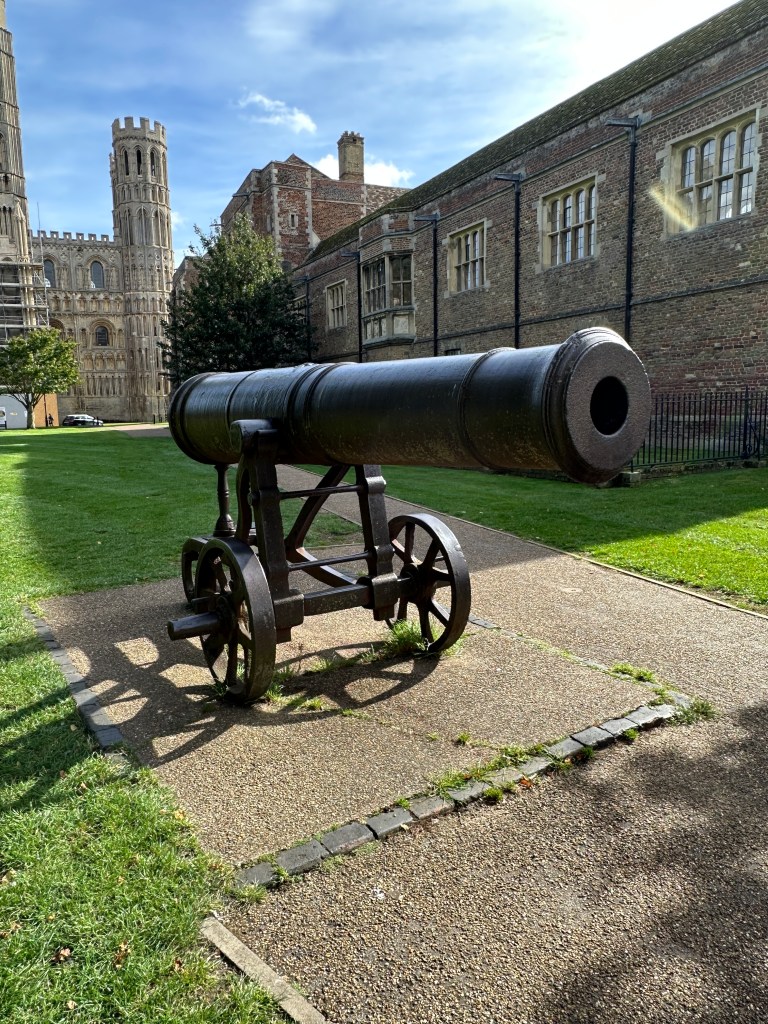
It was the morning of Tuesday, 26th June 1860. There had been heavy rain in recent days but this morning promised fair. And there was great excitement in the city because this was the day of the inauguration of the Russian Trophy Gun in Ely.
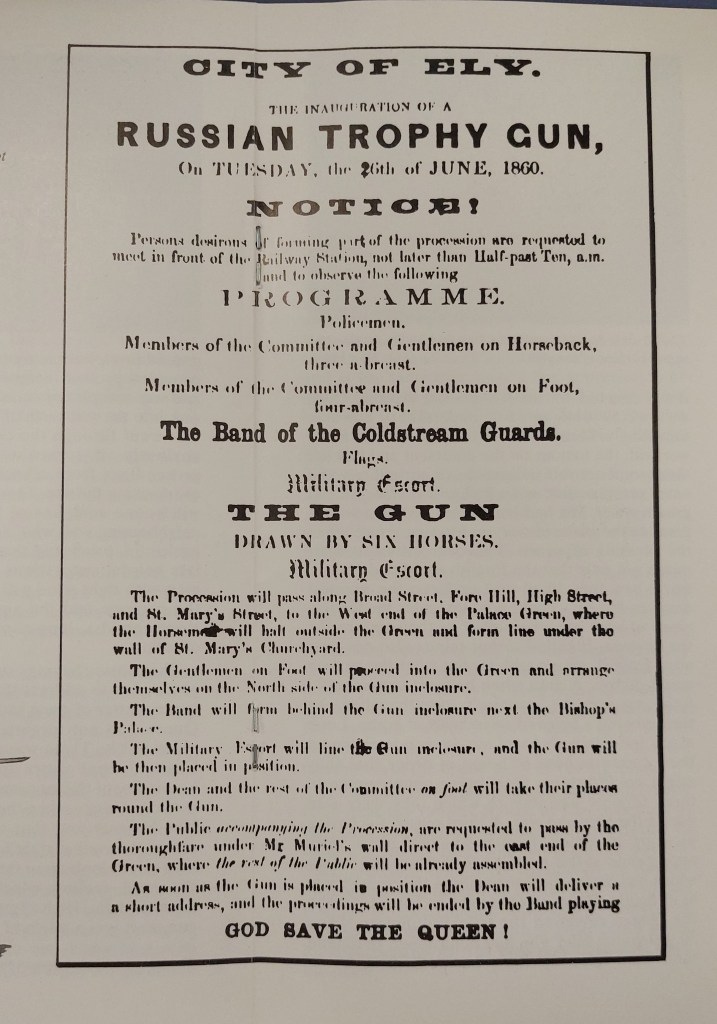
A programme had been published detailing the procession that would escort the great gun from Ely Station to its destination on the Palace Green.
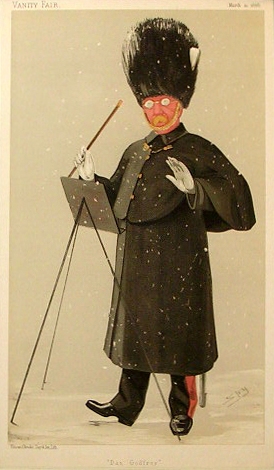
The procession began with a contingent of policemen, followed by members of the committee and around 60 gentlemen on horseback riding three abreast. The Cambridgeshire Chronicle describes these as ‘principal inhabitants of Ely and the vicinity, headed by W. Marshall Esq‘. These were followed by members of the committee and gentlemen on foot walking four abreast. They should have been followed by the band of the Coldstream Guards – in the event, it was the band of the Grenadier Guards who turned up, but that’s another story. The band of the Grenadier Guards was headed by celebrated bandmaster and composer Daniel Godfrey, Esq. some of whose music was played during the afternoon.
The gun itself was escorted by the Cambridgeshire Militia. Part of the staff of the militia came first, with drawn swords. Behind the gun marched the rest of the militia with bayonets fixed. People who were lining the streets outside the station and along the route would follow on behind.
And there would have been thousands of people. Ely’s population at the time was around 7,428 (according to the 1861 census) but the Eastern Counties Railway Company offered return fares for the price of a single for the day from stations along the lines from Cambridge, Norwich, Lynn and Peterborough so we can imagine that people flocked into the city from across East Anglia.
The Cambridge Independent Press describes the scene: ‘Flags and banners were floating in every street, and arches, made of flowers and evergreens, were suspended in many places over the roads.’
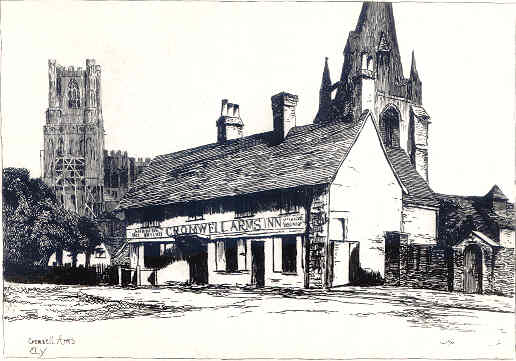
It would have been a particularly merry day for many people – the procession passed at least five pubs (the Crown, the Railway Tavern, the Angel, the Black Swan, and the Royal Oak) between the station and Broad Street alone. There were many more along the route including the Cromwell Arms, now Oliver Cromwell’s House, just beside St Mary’s churchyard.
The gun, including its carriage, weighed around 5 tons and was drawn by a team of six heavy horses, lent by the principal brewers of the city. The route was a long one. From Broad Street the procession went up Fore Hill (which may be why they used six horses), along High Street and round into St Mary’s Street where it halted outside St Mary’s churchyard. On the Palace Green an enclosure had been set up for the gun and the dignitaries, and the band formed up between the enclosure and the Bishop’s Palace.
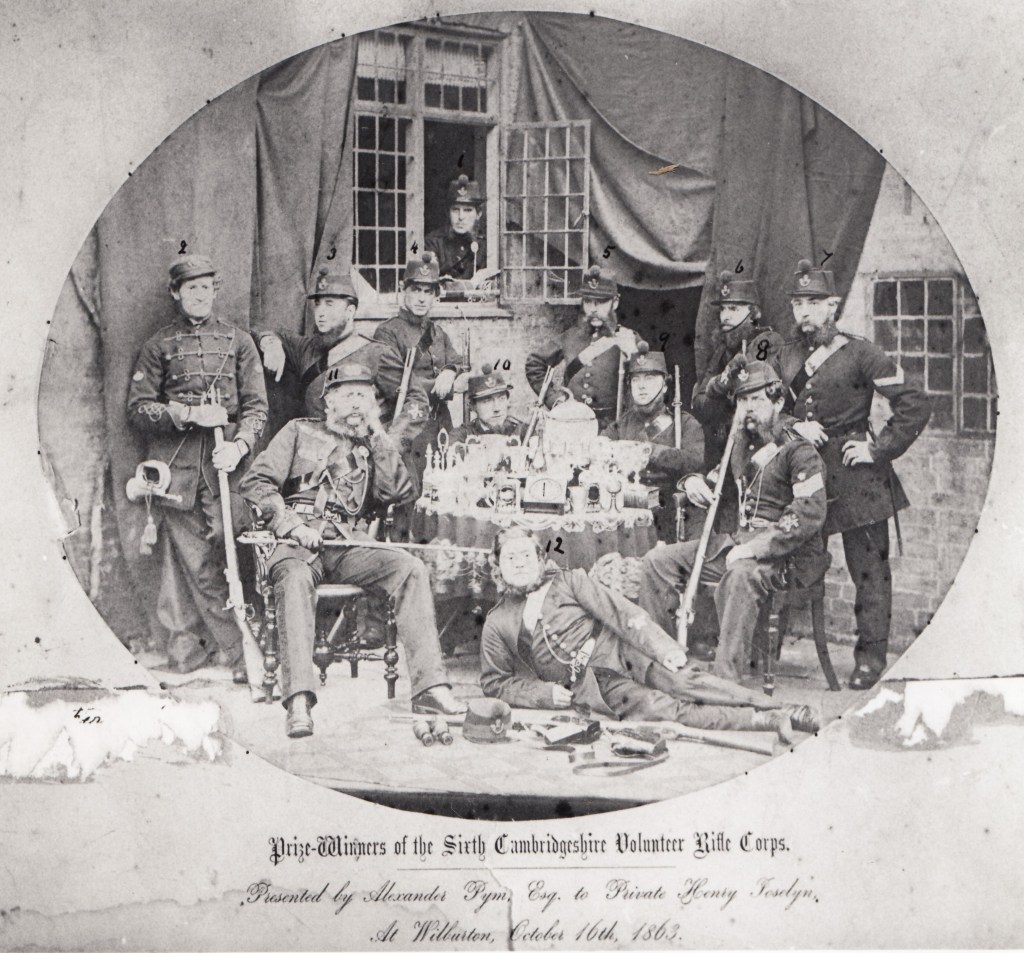
Although the day seems to have been a great success, it didn’t all go to plan. The biggest disappointment was the absence of the Ely Rifle Volunteers. A call had gone out earlier in the year for young men to form into local bodies for training in the use of rifles for the protection of country and empire. The Ely company was quickly formed and the trophy gun had been requested to mark the inauguration of the company. Alas, the smart green uniforms, which had been ordered from London tailors Hebbert and Co for the new company, did not arrive in time and consequently the Rifle Volunteers did not take part.
Hauling the gun from the station to the Palace Green seems to have been the easy part because the route was along paved roads. However, there was a section of grass to cross before the gun reached the stone base that had been made ready to receive it. Recent downpours had made the ground extremely soft so timbers were laid across it. The horses had already been unyoked so the gun had to be manhandled the last few yards into position. But there was another obstacle. The stone base was 6 inches above ground level and so a wooden ramp had been made. However, the weight of the gun was too much for the timbers which were splintered and crushed. The Cambridgeshire Chronicle reports that ‘a murmur of fear went through the crowd.’ The report goes on, ‘There were outbursts of small wit from a company of little boys perched on a neighbouring wall who, not being allowed into the enclosure, privileged themselves to offer more or less helpful suggestions and comments.’ It continues, ‘But the men with right good will set their shoulders to the carriage and the gun was heaved on to the stone amidst long-continued and uproarious cheering.’ One can imagine the men repaired directly to the Cromwell Arms!
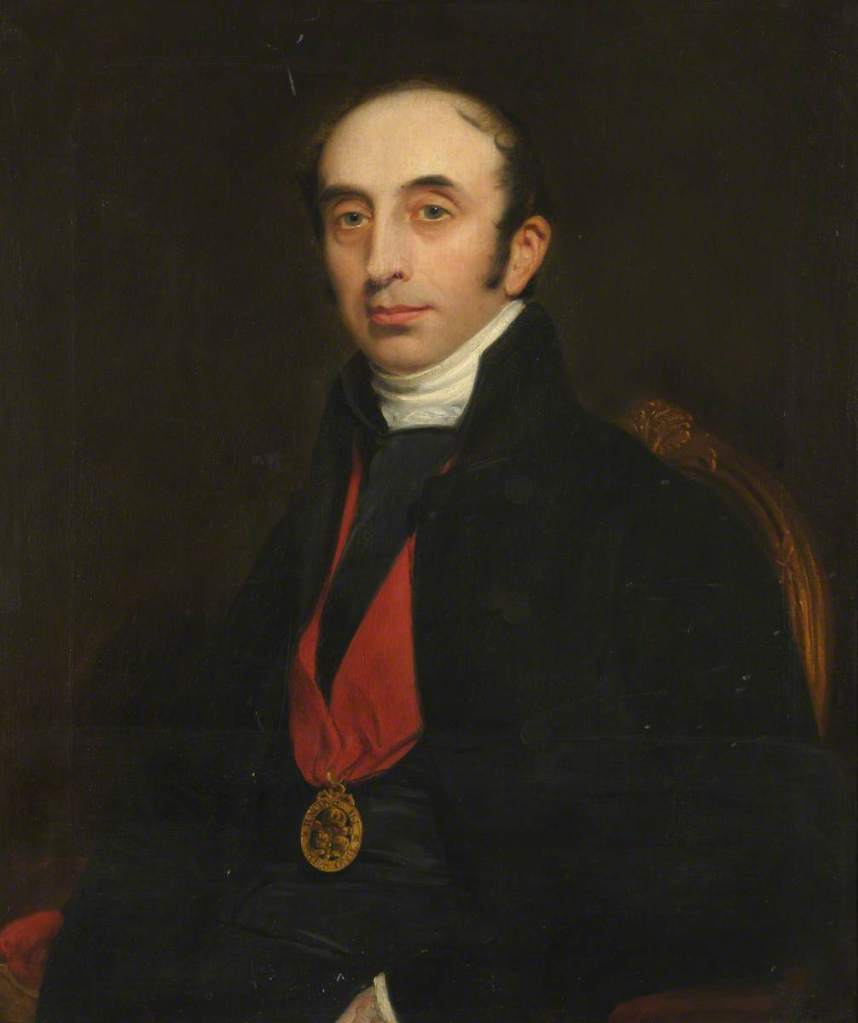
The proceedings were watched by the Lord Bishop, Thomas Turton, from a window of his palace (possibly the beautiful Oriel window in the image above).
The Very Rev the Dean went on to make a speech, which ended with three very hearty cheers for the Queen after which the Grenadiers struck up the National Anthem. The ground was then opened to the general public. The day continued with a Horticultural Show in the Palace gardens during which the band of the Grenadiers continued to play.
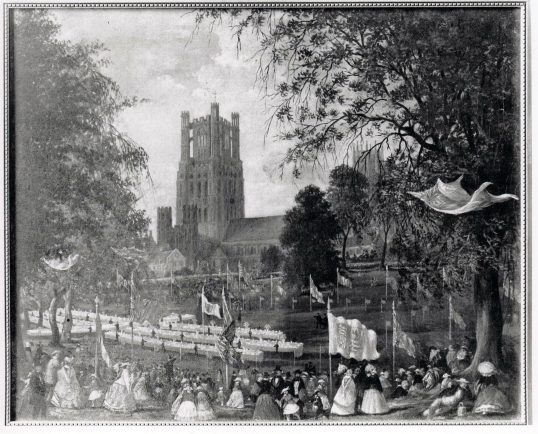
Sadly, there doesn’t appear to be a photographic record of the great day. However, the following photographs from the Cambridgeshire Community Archive Network give a clue as to what the scene may have looked like. The first image below shows celebrations taking place in the Dean’s meadow in 1863 – the fashions wouldn’t have changed much in three years. Food was served at the 1863 event but not at the inauguration of our gun, a fact observed in an amusing, and slightly aggrieved, article in the Cambridgeshire Chronicle by ‘An Ely Rifleman’.
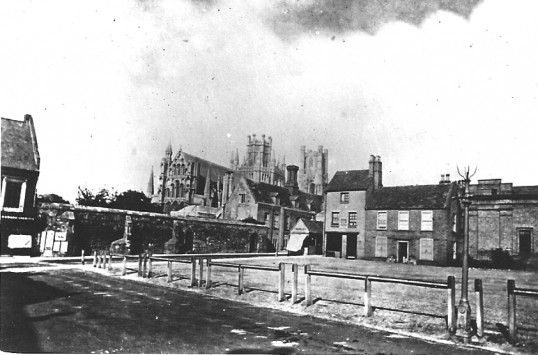
The next picture shows Ely Market Place in the period. Our gun was hauled up Fore Hill (to the left of the picture) and along the cathedral side of the Market Place into High Street. There’s a glimpse of the old Corn Exchange building (built 1847 and demolished in the 1960s) in the right of the picture.
Sources:
Holmes, Reg – Ely Inns 1984
Holmes, Reg – The Cannon on the Green (1970s)
Cambridgeshire Chronicle 16th and 30th June 1860
Cambridge Independent Press 30th June 1860
 cannononthegreen.uk